
"yellow honey"
1000 article(s) found
Costa Rican black honey flavor describes which brand of black honey coffee is good.
For the exchange of professional baristas, please follow the coffee workshop (official Wechat account cafe_style). The most famous large planting area in the country is Tarrazu, near the capital, San Jose. Tarazhu producing area has the highest average latitude and excellent climate and soil conditions, which makes Tarazhu the most famous and generally recognized coffee producing area in Costa Rica. Tres Rios is the tower.

Flavor description of St. Louis coffee beans treated with Costa Rican yellow honey
The flavor description of Costa Rican yellow honey treated St. Louis coffee beans produces regional aromas: both dry and wet aromas have distinct maple syrup aromas, that is, the sweetness of pectin fructose from high-quality lightly baked beans, which is very different from that of caramel; the hot smell is very high, similar to grapefruit, a little colder or diluted to identify melons. Taste: the taste of melon is obvious in the mouth, with a little nut.

Is there any unique coffee in Costa Rica? Carnett Manor Honey treats Huang Kadu Emozat
Professional barista exchanges please follow the coffee workshop (Wechat official account cafe_style) Costa Rican Coffee Carnett Manor Mozart honey treatment yellow Costa Rica Canet Mozart exclusive honey treatment spectrum of Yellow Catuai; Catuai Amarillo) from the New World (Mundo Novo) and Kaddura (Ca)

About honey treatment
There are three main types of coffee treatment: sun, water, honey treatment. Sunlight method is to directly expose coffee cherries before removing the shell and pectin layer; washing method is to sift out coffee pulp before exposure and ferment to remove pectin layer; honey treatment method is between sunlight method and washing method: after sifting out coffee pulp, keep pectin layer directly and expose to sunlight. Then you ask where the honey is? honey

West Java coffee bean honey treatment what is honey treatment honey treatment difference
Professional coffee knowledge exchange more coffee bean information please follow the coffee workshop (Wechat official account cafe_style) Indonesia Arumanis honey treatment West Java (S795) Variety Source: S795 = S288 / Kent ((S288 (S26) x Typica) / Arabica x Liberica) to collect and screen by hand, retain the ripe fruit, peel the fruit and retain the pulp during treatment

Different classification and recognition of Costa Rican honey treated with honey
Exchange of professional baristas Please pay attention to the coffee workshop (Wechat official account cafe_style) the honey handling method in Costa Rica is an improved peeling and tanning method from Brazil. Honey treatment process: after picking the red fruit, remove the peel and part of the pectin, directly spread the sticky shell beans on the African elevated net bed with excellent drying effect, turn the shell beans every few hours to make the coffee beans uniform.

Introduction to the production area of Costa Rica Yellow Honey Coffee Bean by Grinding scale treatment
The coffee trees grown in Costa Rica are all Arabica coffee trees. Through improvement, the quality of coffee beans is better and more stable. In order to facilitate picking, coffee trees are maintained at a height of about 2 meters by continuous pruning. The coffee that people eat is the taste of seeds in the fruit that are brewed in water. Pick
What is honey-treated coffee beans? What are the four levels of honey treatment?
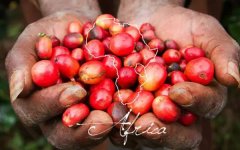
Professional coffee knowledge exchange more coffee bean information please follow the coffee workshop (Wechat official account cafe_style) what is honey-processed coffee beans? Honey treatment, called Honey Process or Miel Process, is called Honey Coffee, and coffee plantations in Costa Rica (Costa Rica), Panama (Panama) and Guatemala (Guatemala) all have it.

Nicaragua Bull Estate Yellow Honey Processing H1 Variety Coffee Flavor Characteristics_What is Red Bull Coffee
Professional coffee knowledge exchange More coffee bean information Please pay attention to Coffee Workshop (Weixin Official Accounts cafe_style) Yellow honey Nicaragua Coffee Bull Manor Nicaragua Las Promesas Gonzalo Adn Castillo Honey Hazelnut Peach Green Apple 2018 Nicaragua COE 2nd place, Cup score 90.42 points Nicaragua-Bull Three Fighters series ====
How to grade the coffee beans after honey treatment?
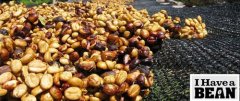
The honey treatment of raw coffee beans is to remove the peel and pulp and retain some or all of the mucous membranes (honey). Today, some Costa Rican growers grade honey-treated coffee beans according to the color of the coffee. There are three levels: yellow, red and black. The change in color results from the length of light during the drying process of coffee. Methods / steps the illumination of raw coffee beans treated with yellow honey

Differences between coffee treated with Costa Rica yellow-red and black honey and coffee beans treated with Costa Rican honey
Professional barista communication please follow the coffee workshop (Wechat official account cafe_style) yellow honey, red honey, black honey treatment, where is the difference? When you want to buy honey-treated coffee, you usually have the choice of yellow honey, red honey and black honey. You may have heard of these honey treatments to retain the percentage of pectin layer, and what does this mean? The coffee farmers' association classifies the coffee

Panamanian Yellow Honey Coffee processing Coffee Poquet Cotova Manor Don K Coffee Manor Origin Information
The exchange of professional baristas please follow the coffee workshop (Wechat official account cafe_style) Product name: Panamanian Poquet Don K Manor Yellow Honey Private Collection (Panama Boquete Don-K Reserva Yellow Honey) Flavor description: flowers, white grapes, grapefruit, honey, smooth and delicate texture. The village under Kotowa

Costa Rican Coffee Manor Goddess Manor introduces the Tarasu producing area in the western valley
Yellow honey: about 40% of the pectin is removed; the drying method requires the most direct heat absorption, receives the most light drying, and lasts for about 8 days to reach a stable water content. Red honey: about 25% of the pectin is removed; it takes longer to dry than yellow honey, and reduces direct exposure to sunlight, even in shading sheds, lasting about 12 days. Black honey: hardly removes pectin

A brief introduction to the flavor, taste and aroma characteristics of St. Louis coffee beans treated with Costa Rican yellow honey
After peeling, the peel and pulp of the coffee fruit are recovered as feed for livestock, or converted into organic fertilizer, as well as coffee bean dryer fuel. It can be said that in every process of coffee production, Costa Rica complies with the requirements of maintaining the natural environment. Coffee is an important export product of Costa Rica. It earns a lot of foreign exchange for the country every year, which is vividly called gold.

What are the brewing steps of Costa Rican black honey coffee brands?
Communication of professional baristas Please pay attention to Coffee Workshop (Wechat official account cafe_style) although Costa Rica has won the recognition of coffee lovers through honey-treated coffee beans, it is also closely related to Costa Rica's superior geographical and climatic conditions, and the choice of Arabica species for all the coffee varieties grown. Costa Rica's high-quality coffee beans are called SHB.

Description of flavor of Costa Rican coffee beans and yellow honey introduction of varieties treated in the manor area
Costa Rican coffee bean yellow honey flavor description manor area treatment varieties Costa Rican boutique coffee only in the past decade began to come to the fore. Although Costa Rica introduced coffee from Cuba as early as 1729 and carried out commercial cultivation, it made great efforts to develop the coffee bean industry. But it mainly produces and distributes comprehensive coffee beans and Italian commercial beans for export.

Costa Rica Central Valley-Don & #8231; Ricardo Microprocessing Farm Yellow Honey to treat Kaddura Flavor
Professional coffee knowledge exchange more coffee bean information please follow the coffee workshop (Wechat official account cafe_style) Costa Rica Central Valley-Don Ricardo microprocessing plant yellow honey to deal with Kaddura flavor? Costa Rica is the most stable and best coffee in Central America. Coffee production has a very long history and has been exported to the United Kingdom as early as the 19th century.

Costa Rican Yellow Honey Coffee Bean Flavor Description Grind Scale Variety Production Area Treatment Introduction
Costa Rica Yellow Honey Coffee Bean Flavor Description Grind Scale Variety Area Treatment Introduction Aroma: Dry and wet aroma has a distinct maple syrup aroma, that is, the sweet taste of pectin fructose of high-quality very light roasted beans, and caramel sweet; hot smell aroma is very high, similar to grapefruit, a little cold or diluted can be identified as honeydew melon. Flavor: The taste of honeydew melon is obvious, with a little bit

Measured data of coffee bean cup treated with yellow honey in Tara Jupena Pena Farm, Costa Rica
The exchange of professional baristas please pay attention to the coffee workshop (Wechat official account cafe_style) Costa Rica Tara Jupena Pena Farm Yellow Honey treatment Costa Rica is the most stable and best quality coffee in Central America, coffee production has a very long history, coffee was exported to Britain as early as the 1800's in the 19th century. There was no idea of fine coffee in 1880.

Introduction to the production process of Honey-treated Coffee Bean Solar washing processing Plant
The production process of honey-treated coffee beans is introduced in the production process of sun-washing treatment of coffee beans. The three are distinguished according to the time of sun exposure and the amount of pectin, and the amount of pectin and endocarp determines the time of sun exposure. Yellow honey has 25% endocarp, 50% red honey and 100% black honey. Therefore, from yellow honey to black honey, the drying time is longer, and the management requirements are more stringent. If you have to pick out